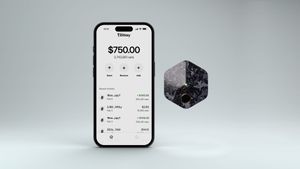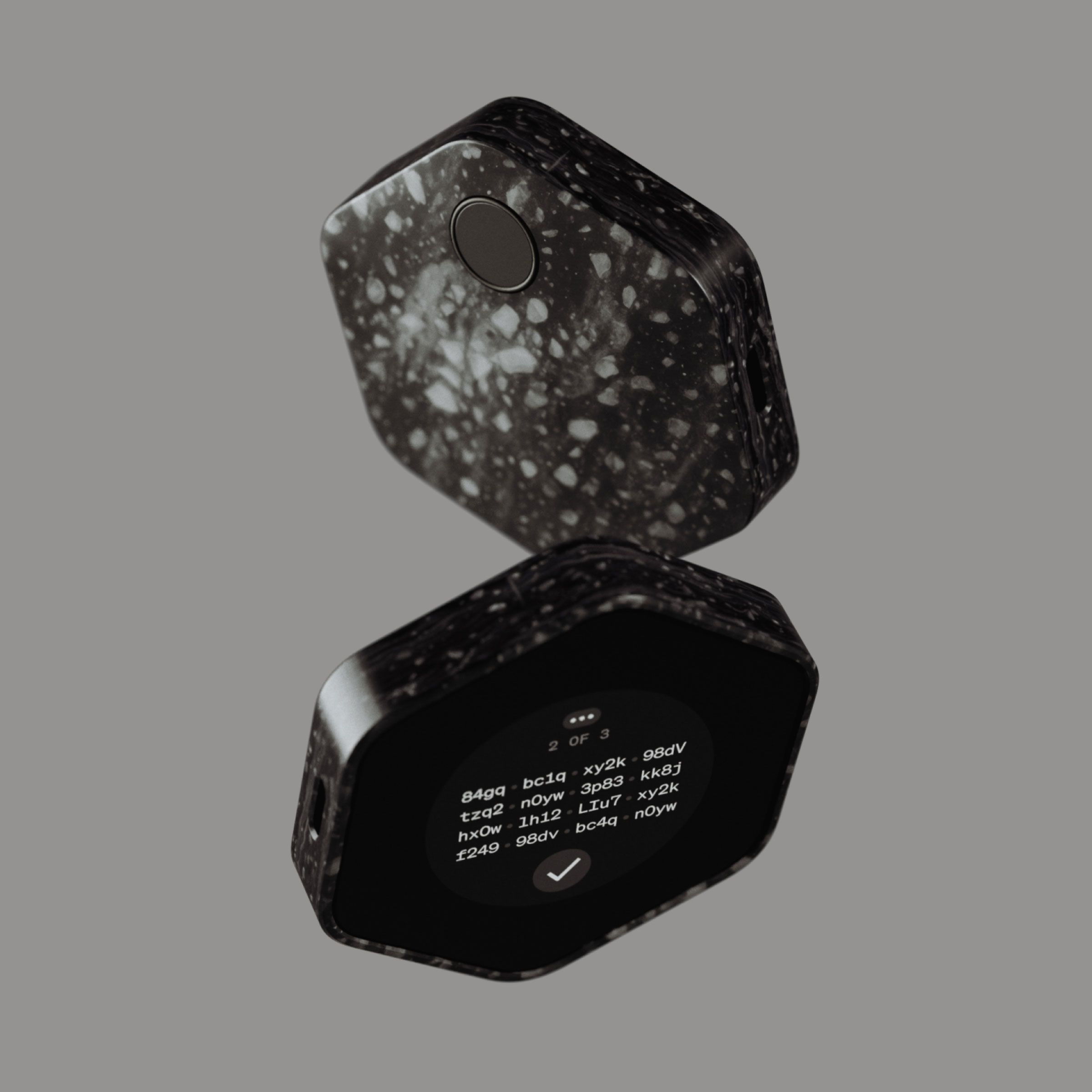
Today we're introducing a new Bitkey. It keeps everything that's defined Bitkey from the start: two-of-three multisig by default, no seed phrase, biometric access, secure hardware that never exports its key, recovery paths for phone loss, hardware loss, and total loss, built-in inheritance, and an Emergency Exit Kit that lets you leave with your funds no matter what happens to us.
And it has a screen.
Bitkey's screen goes beyond what you'd expect from a typical hardware wallet. Most hardware devices use the screen to validate transactions. Bitkey uses it for so much more. Your wallet isn’t just transactions. It's also a set of settings that define what happens when things go wrong — who gets notified if someone tries to recover the wallet, where those notifications go to, who can help you recover if you lose everything, how much you can spend without the hardware, and who inherits your funds. Every one of those settings is a security-critical decision. Bitkey hardware verifies them all.
Bitkey solves self-custody, not just signing
Self-custody is more than signing. It's keeping your keys safe from the full range of ways they can be lost or stolen. It's making sure a lost phone or device doesn't turn into lost bitcoin — and that your heirs can find their way when the time comes. It's protecting your personal information so your holdings don't make you a target. It's making the right thing easy and the wrong thing hard — on day one, on year five, on the day someone tries to trick you.
We started from a different question: what does it actually take to own bitcoin safely – not just in theory, but in practice, over a lifetime? For anyone who wants to follow that all the way down, we've written a deep dive on how the pieces fit together.
Most hardware wallets secure your signatures. Bitkey secures your wallet.
Authored by